"You miss 100 percent of the shots you don't take." — Wayne Gretzky
On July 3, 2003, my son Parker was born at a hospital on the Chicago lakeshore. I was standing at the window of his room when the July 4th fireworks began to rise over Lake Michigan, red and white and blue scattering across the water. My American son, arriving on the eve of Independence Day, into a celebration that was not quite his and somehow felt like it was anyway.
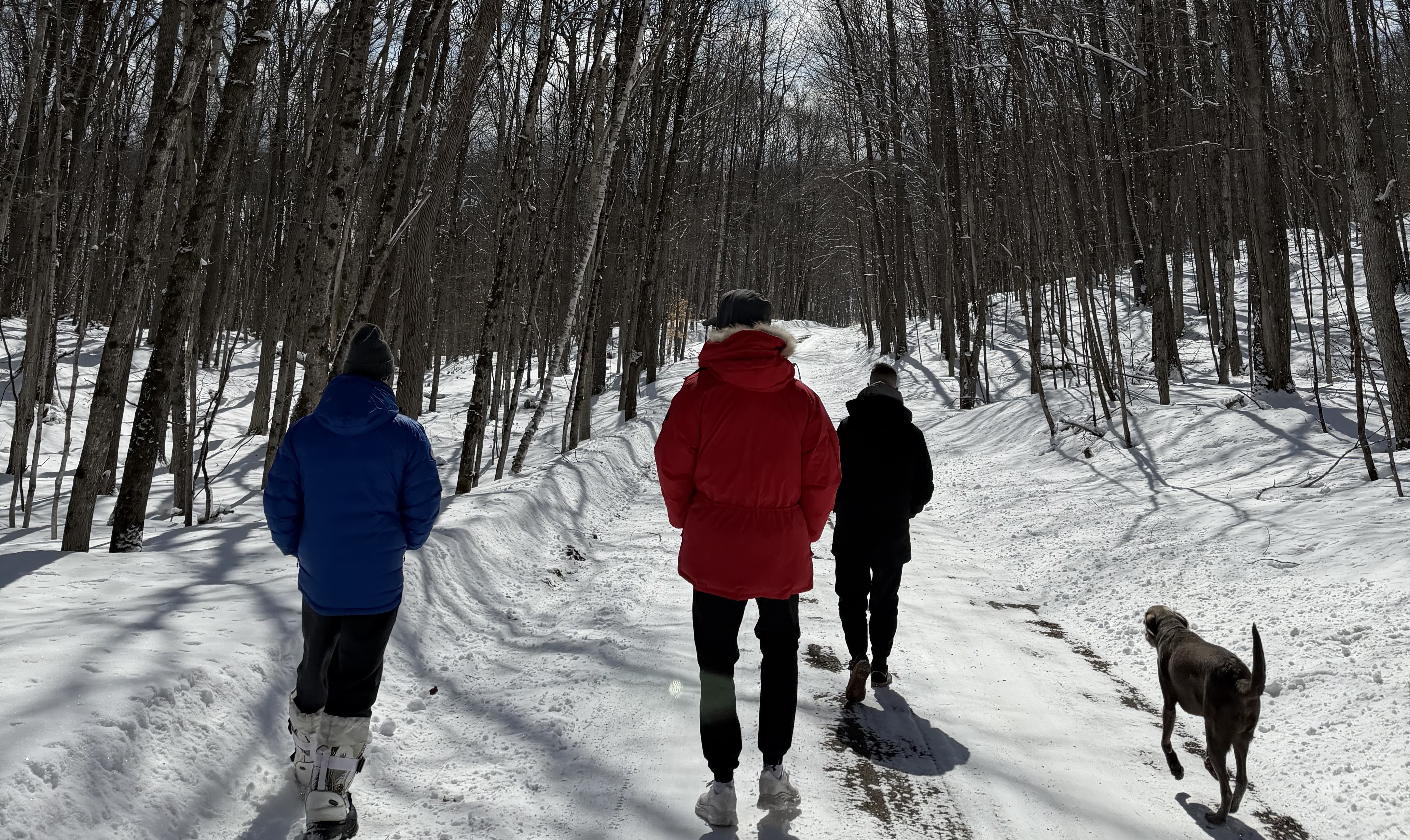
Twenty-three years later I am writing to you on the morning of Canada Day, thinking about what it means to hold citizenship in both nations. I was born here in Canada. I am American too, through my mother, who was born in the United States. So I have spent my life with one foot on each side of a border that barely feels like a border at all, certainly not when you are standing on a dock with your dog, looking out across the water.
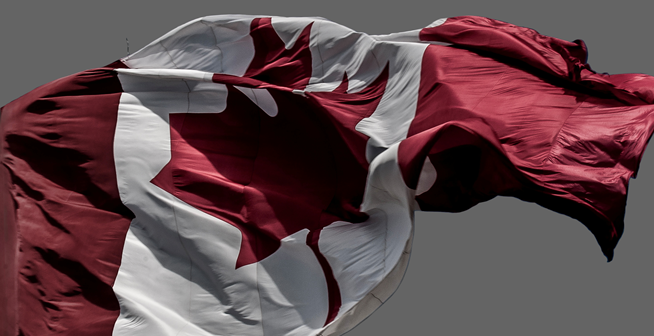
Before we go any further, a word about the banner. That painting is the work of James Lahey, one of the finest artists this country has produced, and a friend. He has let us feature it here, and there is a detail about it that I love: It is not finished. It is still in progress, still becoming what it will be. I cannot think of a better image for this particular morning, because Canada at 159 is also a work in progress, still figuring out what she is, and lovely in exactly that unfinished way. I am grateful to James for sharing something unfinished with us, and quietly thrilled that he reads these letters and wanted to be part of what we are building.
So, happy Canada Day! And to our American friends and family, who mark 250 years on Saturday, happy Independence Day! I hope this week gives you real time with the people you love, in the places that feel like home. If you need a thought to carry into it, I will borrow one from a great American, Yogi Berra, who said, “the future ain't what it used to be”. He had no idea how right he was, and in a moment I will tell you why that line has been on my mind.
This week we celebrate both countries. Canada turns 159 today, America 250 on Saturday. Two nations, two and a half centuries of building between them, and underneath both, if you stand back far enough, the same quiet question: How do we do this together?
Let me take you the long way round to the markets. The scenic route is the point.
What feels urgent right now is loud. The Strait of Hormuz has spent the week swinging between open and shut depending on who is doing the talking. The talks that were meant to start in Doha never started. The agreement signed in June is fraying. Over the weekend, according to news reports, two tankers were struck near the strait, the United States answered with strikes of its own on the Iranian coast, and a drone reached as far as Bahrain. Whatever you wanted to call the calm that followed the June deal, it is not yet calm.
And yet oil has done the opposite of what those headlines suggest: Crude has drifted back to around 70 dollars, roughly where it sat before the war began in February, down roughly 40 percent from its April high, as Saudi Arabia and its neighbours reopen the taps and exports climb back toward normal. The price is telling you the crisis is over. The facts are telling you it is only paused. Iran has already signalled that once a grace period of about 60 days runs out in mid-August, it means to start charging vessels simply to pass through the strait, something that waterway has never asked of anyone.
That gap, between what the price feels and what the situation actually is, is the most useful thing in this whole letter, so let me sit on it a moment. The market is pricing the best possible outcome. It has decided the danger has passed and quietly stopped charging for the danger that has not. There is an old and unfashionable truth in this business, that risk is highest at the exact moment it feels lowest, because that is when everyone has stopped paying attention to it. The calm we are enjoying is rented, not owned. And the rent comes due in August. My own view, for what it is worth, is that this back and forth in the Middle East goes on a good deal longer than the market currently believes, and that the strait does not reopen cleanly or soon. We are happy to take the other side of the crowd's optimism.
Seventy years ago a different narrow waterway taught the same lesson. In 1956 Egypt nationalized the Suez Canal, Britain and France and Israel answered with force, and the world tilted toward something darker. Then a Canadian named Lester Pearson, who would later become our Prime Minister, did something nobody had quite done before. Rather than pick a side, he proposed sending a neutral United Nations force to stand between the parties and let everyone cool down. It worked. The ceasefire held, and he won the Nobel Peace Prize the next year. What stays with me is that Pearson did not end the conflict so much as buy time and keep people talking. Peace at a chokepoint is never won once and kept forever. It is tended to, patiently, again and again. That is what we are watching now, and it is worth being grateful the tending is holding.
There is a second kind of pressure building, and it has been slower to reach the headlines. To see it you have to step back from all the talk of artificial intelligence and notice what that talk actually requires in the physical world. We are building data centres, the vast warehouses of machines that train and run these models, faster and on a bigger scale than anything we have attempted before. The International Energy Agency expects the electricity those data centres draw worldwide to roughly double within five years. Goldman Sachs expects American data centre power demand to more than double between 2025 and 2027. This is not a forecast or a hope. It is concrete, committed, happening right now. And as those buildings go up, they are colliding with something nobody expected to matter quite so much. Water.
In Arizona, which has become one of the most sought after places in the country to build these things, residents around Tucson and the farming town of Marana spent the spring, as widely reported, fighting a cluster of enormous data centre projects. One alone would have become its city's single largest consumer of water. The region is in a drought now rated extreme, the Colorado River is carrying about 20 percent less than it did at the turn of the century, and the state is staring at water cuts that could go deep. One of the residents who led the fight, a former Wall Street banker who now works as a research analyst, worked out that the heat thrown off by the servers and their cooling would be like running a million space heaters without pause, in a place that already hits 112 degrees in summer. The town council voted unanimously not to hand over the land, the water, or the power. The project went ahead anyway, just past the city limits. The slogan the residents carried said the whole thing in six words: Not one drop for data centres.
Here is what stays with me: The enormous build out everyone is modelling in spreadsheets, the chips and the centres and the models, all of it runs straight into a desert that has been rationing water since 1980. The most transformational technology of our lifetime needs cooling, needs power, needs stable grids and abundant resources, and none of those things is infinite or evenly spread.
Canada happens to have exactly what that future is short of: Water. Hydroelectric power. A cold climate that makes the cooling cheaper. Room to build. While a desert town counts every drop, we sit on an abundance of the very things the next economy is starving for. That is not a reason to gloat. It is a reason to notice what we have, and to look after it.
Step back from the week and the bigger story is not really about oil or water at all. It is about concentration, and about how every generation falls in love with its biggest idea.
Jeremy Grantham has spent the past year back in the history of bubbles, and his central observation is one worth sitting with, because it runs against instinct. Bubbles do not form around frauds. They form around the most real ideas, the ones everyone can plainly see will change the world. The railroads did change the world. Everyone saw it coming, everyone piled in, money arrived faster than discipline could absorb it, and the railroad stocks collapsed anyway before the technology went on to remake the century. The internet did the same. Amazon rose several fold in a single year, fell more than 90 percent in the wreck that followed, and then went on to inherit the entire retail world. The technology was real. The bubble was real. Both were true at the same time. Which is the lesson that matters most today. The fact that artificial intelligence is genuinely transformational is not the argument against a bubble. It is the very thing that makes one possible.
And the numbers are at a real extreme. The ten largest companies in the S&P 500 now make up more than 40 percent of it by value. That is an-all time record, nearly double where concentration stood even at the dot com peak in 2000, when the ten largest reached only about 26 percent. And they earn only about a third of the index's actual profits. Price has run out ahead of profit. Worse, the engine that justified the gap is fading. For years these giants grew their earnings far faster than everyone else, which is what earned them their premium, and the latest work, including a note this week from the chief economist at Apollo, shows that advantage closing. The giants are slowing, the other 493 companies are catching up, and the two are converging. Meanwhile the giants are pouring so much into the build out that the cash underneath them is actually shrinking even as the construction goes on. Little wonder the premium investors will pay for them has fallen to its lowest in more than a decade, and that money has quietly begun rotating toward companies that are cheaper and generate real cash. This is no longer a contrarian whisper. It is becoming the considered view of the people who watch most closely.
If you want the scale of it in terms close to home, consider this: NVIDIA, the most valuable company in America, is now worth roughly as much as the entire Canadian stock market, every public company in this country combined. One company, about the size of a nation's whole market. That is no knock on NVIDIA, which is a remarkable business. It is simply a measure of how much has to go right to justify a bet that size, and how little room is left for anything to go wrong.
There is a line I come back to constantly. Plan for the plan not going according to plan. It sounds like a play on words until the day you actually have to live by it.
Nearly every investor has a plan to make money, and it rests on one assumption, that markets go up. That is the easy half. The hard half, the half that decides whether you sleep at night, is having an answer ready for the day the assumption breaks. What is your plan to not lose money when markets fall? Almost no one asks it, and that single question is the whole reason a good portfolio holds things that do not move with the crowd. Not to be clever. To be ready.
My grandfather taught me something early on that I never forgot: You can never go broke taking profits. We are allowed to feel at peace with a sound decision no matter what the price does the next morning. We cannot let greed make our choices, and we cannot let fear make them either. The decisions I am proudest of are the ones where we calmly bought what everyone else was busy selling, because the fear in the room was the opportunity.
There is a number in this business that deserves to be far better known. Morningstar has spent close to twenty years measuring something simple and a little sobering, the difference between what a fund earns and what the people who own that fund actually take home. The two are not the same, and the reason is timing. Money tends to arrive after the good news and leave after the bad. Over the past decade that gap has run a bit more than a percentage point a year, somewhere around 15 percent of the return that was sitting right there for the taking, and not because the funds were poorly run. The funds did their job. The investors did not let them. Here is the part that shapes how we build for you: The gap is widest in the most exciting, most volatile corners of the market, and narrowest in calm, balanced portfolios that are simply easier to live with. The steadier the ride, the more of the return you actually keep.
One of the first lessons I was given in this business was that the crowd's instincts, rushing in after the gains and fleeing after the losses, are the enemy of good returns. I have tried to live on the other side of that ever since. I want to be in the least crowded room. I want to be doing the thing most people are not doing, or not doing the thing everyone else is. Now, picking the right investments matters enormously, to us and to you, and we work hard at it. But it is not the only thing that matters. A great deal of what we do is help good people stay in their seats through the very moments that tempt everyone else out of them, and to think independently when independence is most expensive. Quietly, unglamorously, that is where a large share of the real money gets made.
So what does being ready actually look like in a portfolio? A few words on how yours is built, because the architecture matters far more than any single holding.
We took our profits in the dominant theme near the top of the enthusiasm, and we sit neutral on the broad market today rather than chase it. That is the restraint. The more interesting half is what we hold instead.
A meaningful part of every portfolio sits in what we call real assets. Gold, bitcoin, and energy. These are not afterthoughts or marginal positions out at the edges. They are core, deliberately held, because they tend to behave differently from stocks and bonds when markets turn, and because each one is built for the world we actually see coming rather than the one we are leaving behind.
And what makes us comfortable holding them right now is the very thing making most investors uncomfortable. All three have fallen out of favour. The sentiment is sour, the recent price action has been poor, and these are three things that were flying not long ago. That, frankly, is when we tend to get most interested. When everyone is running from something is usually when the setup is most promising. I cannot tell you the exact moment the tide turns, because no one knows it. But experience teaches that when sentiment reaches these extremes, the next real move tends to be the other way. The fact that they are unloved at the moment is, to us, a comfort rather than a worry.
Energy deserves a fuller explanation, because I want to be precise about why we own it. We do not own it betting that oil rockets to some dramatic number. We own it on a quieter, sturdier idea, that oil simply holds around these levels or higher, and that this alone is more than enough. Three things make me believe it will. The world's oil stockpiles have been drawn down at a record pace, and on the International Energy Agency's numbers, inventories across the developed world are heading toward their lowest in more than two decades, with new supply slow and increasingly expensive to bring on. The world's hunger for energy is rising structurally, not just cyclically, and by the end of this decade the same agency expects the United States to use more electricity processing data than it uses making aluminum, steel, cement, and chemicals combined. And the producers we favour break even at strikingly low prices. On the Dallas Federal Reserve's own surveys of oil executives, the strongest operators turn a profit with crude well below where it trades today, which means that at current prices they are not merely surviving. They are throwing off serious cash and handing it back to shareholders, which here means to you, through dividends and buybacks.
There is a floor beneath all of this that the headlines keep missing. As the political scientist Robert Pape has argued, Iran does not need to shut the Strait of Hormuz to hold real leverage. It needs only to keep enough uncertainty alive that inventories keep drawing down and the cost of waiting keeps climbing. That uncertainty is not going to resolve cleanly, or soon.
None of which is a promise. The honest risk to the view is a genuine slump in demand, from a recession or a faster than expected end to the conflict, that pushes prices lower for a while. We hold that plainly in view. It is exactly why energy is one disciplined sleeve of a diversified portfolio and never the whole bet.
Which brings me to the rest of the architecture, and it is broader than most people imagine. Beyond real assets, your portfolio holds a genuine alternatives sleeve. On one side, private assets, private equity and private credit, less liquid but also less tied to the daily mood of the public markets. On the other, liquid alternative strategies, trend and momentum and market neutral approaches, the kind built to hold their ground, and sometimes even to lean the right way, in the very moments public markets buckle. This is the part of the portfolio you barely notice when the sun is out. It is the part you are grateful for when it is not.
This letter is mostly about markets, the way these letters tend to be. But if you know us at all, you know that what we really stand for at Seven Hills is a wider idea of wealth, a personal balance sheet that holds a great deal more than money. And here is something I have come to believe. The discipline that keeps you in your seat through a falling market is the same discipline that gets you out the door on a cold morning. They are really one skill wearing different clothes.
There is no pill, no clinic, and no doctor on earth that can do for your health what a steady run of good sleep can. Tend a small handful of things, your sleep, what you eat, how you move, the people you love, and a life with room in it for something larger than yourself, and there is no medicine that comes close to the daily return. The research keeps landing in the same unglamorous place. People who practice gratitude are measurably better off. People who are not lonely live longer.
For those of you who know me well, you know how seriously I take all of this, and some of you know why. A health scare years ago taught me, in a way no statistic ever could, that health is the wealth that makes every other kind worth having. I have tried to live by that lesson ever since, imperfectly, the way everyone does.
I come back to it every single morning, and it has nothing to do with being perfect. I know people who approach their health the way they approach their portfolios, armed with every study and the newest device, tracking numbers that would tire a scientist, hiring the best help money can buy, and somehow staying stuck in the mud. The analysis becomes its own kind of paralysis. What I have learned is far simpler than any of that. Just keep going. Not perfectly, not optimally, just keep going. A fresh start every morning, whether yesterday was flawless or a mess, because yesterday's mistakes do not get a vote in what you do today. You cannot change the past and you cannot control the future. All you ever actually hold is the decision in front of you, and whether you make it well. That is true in a gym and it is true in a portfolio, and it is most of the whole secret. There is more than philosophy in it, by the way. A long review in the Journal of the American College of Cardiology found that chronic anger and resentment measurably raise the risk to the heart. So letting go of yesterday is not only good for the spirit. It is good for you in the most literal sense.
Which brings me to the part I care about most. In our work we lean on a simple framework we call SHIFT, a way of tending the five kinds of capital that make up a whole life. The Social, the Health, the Intellectual, the Financial, and the last one, Time. We think of all of it as Whole Life Capital, because the number in the account is only ever one fifth of the picture. We added time on purpose, because it is the one form of capital none of us can earn more of, and the one we tend to spend with the least intention. For most of the families we are lucky enough to serve, money is not the scarce resource. Time is. Attention is. Every hour spent second guessing a decision someone you trust could carry for you is an hour not spent on the business, the children, the dock, the people who will remember how present you were long after they have forgotten any single quarter. Handing off that weight is not losing control. It is choosing to say no to one set of demands so you can say yes to the things that actually compound. The question was never whether you are capable of managing all of it yourself. Of course you are. The question is whether that is the best use of the one life you have.
So here is something I do not usually do in these letters. If any of this lands for you, I would genuinely love to hear from you. I am glad to share what I do, to point you toward people far wiser than me, to help you set a goal, or just to compare notes. And if enough of you are interested, I would happily pull together a small group of us who check in through the season and keep one another honest and encouraged. Call it this summer's invitation. With the solstice just behind us, do not try to boil the ocean. Look at those few foundations and ask, of each one, whether there is a single small thing you could do a little better this summer. Then judge yourself kindly and measure again when the season turns. Any improvement at all is worth celebrating. The destination can wait. The next right thing is the only thing that ever really matters.
Now here is where Yogi Berra comes back in: The future ain't what it used to be.
Sit with these two birthdays for a moment, because the distance is almost impossible to feel. When Canada was born in 1867, there was no telephone. It was nine years off. There was no electric light in anyone's home, no automobile, no powered flight, no antibiotics. You travelled by horse, by carriage, by steam train if you were lucky enough to live near a line, and a letter to England took weeks by sea. A great many people never went more than a few miles from where they were born, and a great many did not see their fiftieth birthday. America in 1776 was further back still, by candlelight and sail.
Now picture telling an adult standing in a field on the first Canada Day that one day an ordinary person would carry a small glass rectangle holding every book ever written, and speak face to face through it with someone in Tokyo. That machines would learn to think and write. That people would routinely live past 100. That you would cross the Atlantic before lunch. They would have thought you had lost your mind. And they would have been standing exactly where we are standing now, certain they understood the shape of the world, with no idea what was coming.
That is the thought I cannot shake this week. One hundred and fifty nine years from now, someone may sit down to write a letter like this one, and marvel at how little we could see, at how quaint our certainties look from there. We are someone's 1867. Which is the whole case for humility, in markets and in life. We do not know what is coming any better than that farmer did. The honest response to a future you cannot see is not false confidence. It is to build carefully, to keep some powder dry, to resist the certainties the crowd is selling, and to stay open to a world that will almost certainly surprise us.
What has carried both these countries this far is not any single technology. It is the willingness to build together. Two hundred years ago, in a nation he was trying to hold together, Lincoln asked his fellow citizens to unite with one heart and one mind, to restore the harmony and affection without which, he said, liberty cannot exist. A century later Pearson, our own, put it more plainly in his Nobel lecture. We must keep on trying to solve problems, one by one, stage by stage, he said, if not on the basis of confidence and cooperation, then at least on that of mutual toleration and self interest. Neither man was describing something easy. Both were describing the only thing that has ever actually worked. Not the leap, but the next brick. Not the shout, but the steady hand. The choice to look for the best in people and build toward it rather than away from it.
A word of gratitude closer to home. Gratitude is not formally one of our seven values, but it may be the soil all seven of them grow in, and I feel a great deal of it for the people I work beside every day: Grant, Connor, Chris, and Cassie bring real craft to this. We have three portfolio managers, and the conversations they produce are robust. We argue about risk, about markets, about where the opportunities are, and about the tools we use to serve you. We embrace artificial intelligence and technology broadly. All of us are well up the curve in how we understand and use these tools, and we are genuinely excited about what they can do to help us help you. We move quickly on them because we are not weighed down by the bureaucracy that slows the big institutions. Decisions that take them months or years happen here in real time, around a table, as a team. That nimbleness matters more than it sounds.
And the truth is we do not do any of this alone, and we would not want to. Allan, Shehzad, Sapna, Caroline, and Norm on our advisory board bring wisdom and care. Beyond them sits a whole network of people we are lucky to work with, the accountants and lawyers and financial planners across Canada and the United States who refer their clients to us and work alongside us in service of yours. The plain fact is that most of our new clients come to us this way, through someone who already trusts us, or through someone we work with who shares the simple conviction that the best way to help people is to do it together. Our whole business is built on that idea. We are team players, and we are grateful to every one of them.
As always, the best part of my job is speaking with you. Please feel free to reach out anytime.
Warmly,
Patrick Keeley
Seven Hills Capital Corp.
2 St. Clair Avenue W. | Toronto | Canada
Wealth is not just about what you have, but how you live.
This material is for informational purposes only and should not be construed as investment advice or a recommendation to buy or sell any security. Past performance is not indicative of future results. Please consult with your Seven Hills advisor before making investment decisions.